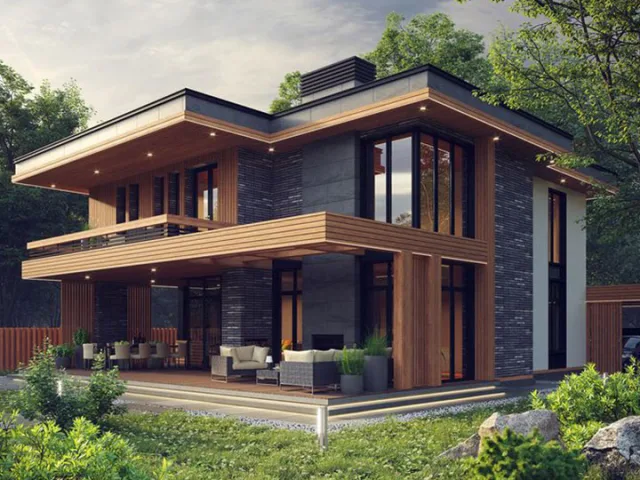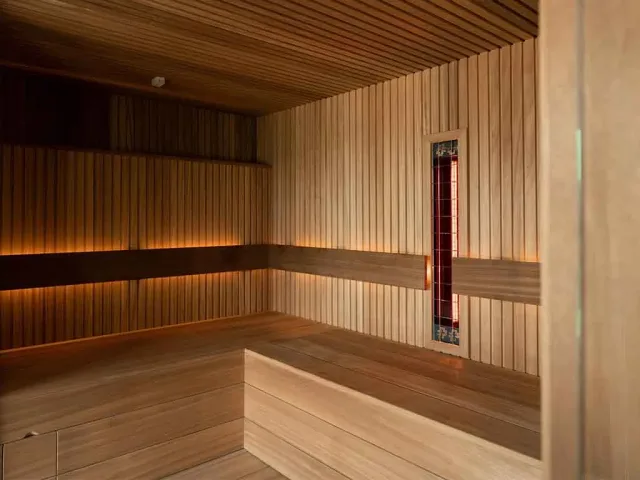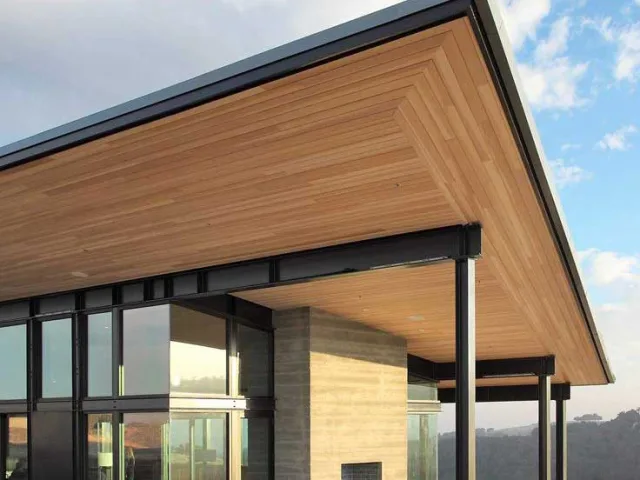
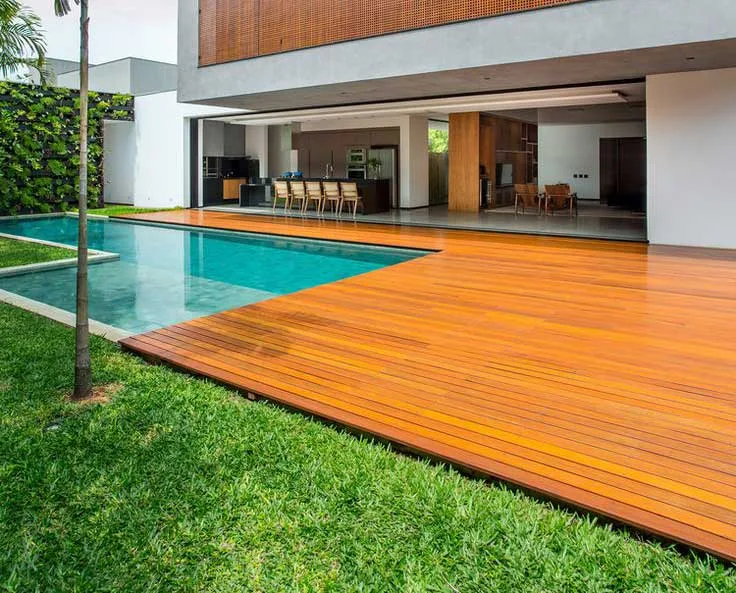
On an exterior floor, species choice is the single decision that sets the service life of the job. Iroko, Sapelli and Teak are all tropical hardwoods and all usable outdoors: but they do not do the same job at the same price.
Natural durability
Teak’s natural oil content gives it the highest resistance to decay and insect attack, which is why it became the standard for boat decks. Iroko sits in durability class 1–2 and performs very close to Teak on exterior floors that are not in ground contact. Sapelli is nearer class 3: safe on sheltered terraces and cladding, but not the choice for a surface that stays wet.
Dimensional stability
How much a timber moves as moisture changes drives every fixing detail, from joint width to screw centres. Iroko leads here: kiln-dried Iroko decking moves very little across a seasonal humidity swing. Sapelli is more active and wants a wider joint allowance.
Colour and weathering
Left unprotected outdoors, all three silver down to a grey patina. Iroko moves from yellow-brown to deep brown, Sapelli to a red-brown, Teak from golden to silver-grey. Holding the original colour means an annual UV-filtering oil.
Which one for your project?
Teak or Iroko around pools and on surfaces that stay wet; Sapelli offers a cost advantage on sheltered terraces and balconies. On project-scale work, continuity of supply is a criterion too: our stock depth is deepest in Iroko.